

Women's Health
At Premera, we are dedicated to providing comprehensive and tailored healthcare services to all women.

Caring for all of you
We’re upgrading our support for women’s health. Women have unique healthcare needs, from gynecological conditions and breast or cervical cancers to pregnancy and menopause. Plus, each stage of life can have challenges that affect mental health and well-being.
Premera’s network of nearly 2 million* doctors, healthcare providers, and hospitals, is designed for you, so no matter what happens you can feel confident that you will receive the treatment, support, and care you need to maintain your overall health.
Get checked out: When to get a preventive screening
If you have a family history or other risk factors, talk with your doctor as your screenings may start earlier.

Screening recommendations for women
Screening tests find health problems before you have symptoms and when treatment is easier.
(The following are general guidelines for common screening tests. Your healthcare provider will consider your family history and risk factors when making specific testing recommendations for you).
Preventive screenings are covered 100% when done by in-network providers. See the full preventive list (PDF document) for additional details.
Cervical cancer screening
Healthcare providers recommend that women have a Pap test every 3 years from ages 21-29. From ages 30-65 HPV* testing may be done with or without a Pap test every 5 years OR women can continue Pap testing alone every 3 years.
*HPV stands for human papilloma virus. This is the virus that can cause cervical cancer and several other cancers. HPV vaccination can prevent over 90% of cancers caused by HPV and is also covered as a preventive benefit.
Osteoporosis screening
Osteoporosis is a health condition that weakens the bones and it’s more commonly encountered in women than it is in men. The risk of developing osteoporosis increases with age.
A bone measurement test to screen for osteoporosis is recommended for women 65 years and older.
Colon cancer screening
Regular screening is recommended beginning at age 45 and continuing until at least the age of 75. There are several colon cancer screening tests, including stool tests and colonoscopy. Talk to your healthcare provider to decide on the test that is best for you.
Breast cancer screening
Most healthcare providers recommend a screening mammogram every two years for all women ages 50-74. Based on your medical history or risk factors, you may need to start screening at an earlier age.*
*A yearly screening mammogram is fully covered starting at age 40.
Sexually transmitted infections
Depending on your age and risk factors, testing may be recommended for sexually transmitted infections. Talk to your healthcare provider for your personal recommendations.
Mental health
Everyone should be routinely screened for depression starting at age 12. In addition, women should be screened for depression during and after pregnancy as the first year after delivery is a time of special focus on mental health.
Note
Keep in mind that if your provider performs tests based on signs or symptoms, your visit could be billed as diagnostic rather than preventive care, which means you could be charged for additional services.
You're the expert on your body, symptoms, and needs
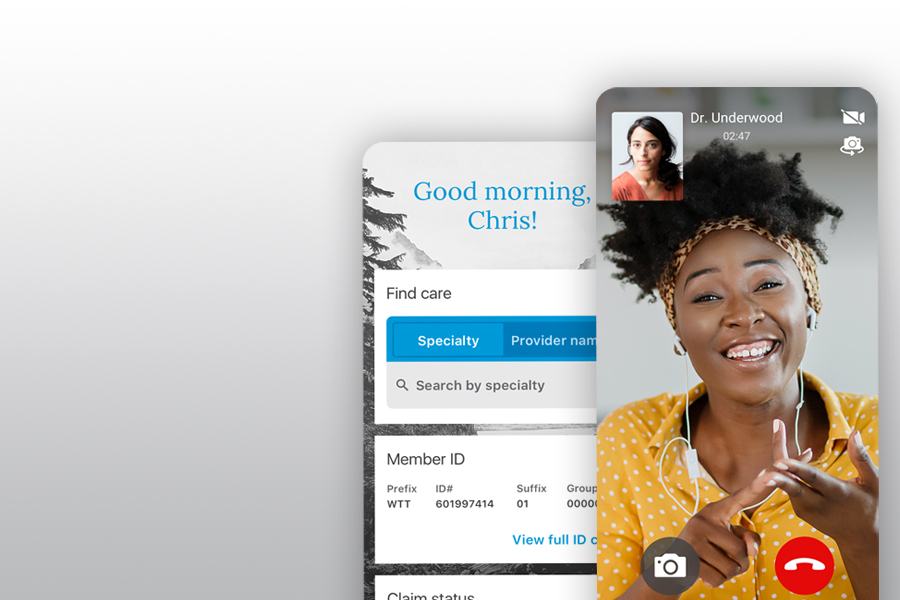
Finding a primary care provider (PCP) you trust will help you reach your personal health goals. Save money by choosing an in-network hospital and doctor. Use the Find Care tool on premera.com or the Premera mobile app.
Get virtual care from your PCP or from one of our virtual care providers, all in the comfort of your home.
See a provider if one or more of the following is true:
- You have changed your lifestyle or work/school schedule because of your menstrual period
- Your flow and/or duration of your period has changed significantly
- You don’t have a period each month
- Your flow is extra heavy (changing a pad every hour, needing both a pad and tampon, soaking sheets at night, bleeding onto clothing, or passing quarter-size clots or larger)
Menopause and how long it lasts
Menopause is when you haven’t had your period (without using hormonal birth control) for a continuous 12 months. Menopause can happen in your 40s or 50s, but the average age in the United States is 51. Symptoms including hot flashes, mood swings, sleep disturbances, difficulty concentrating, frequent urination, joint pain, and muscle aches may occur several years before or after menopause.
Take care of your overall well-being
It’s important to take care of yourself when taking care of others. One way is by being screened for depression during and after pregnancy. The first year after delivery, women can be more prone to mental health challenges. During times of major physical changes, pay extra attention to your behavioral health needs.
We know finding a mental health professional can be hard. Premera Matchmaker™ for Behavioral Health can help find the right fit for you. This service is free of charge to T-Mobile members and enrolled dependents. Call Premera customer service at 866-358-2300 (TTY: 711) to get started.
At Premera, we provide comprehensive and personalized healthcare services to all women. Our network of nearly 2 million doctors, healthcare providers, and hospitals is designed with your needs in mind. No matter what phase of life you’re in, you can feel confident that you will receive the treatment, support, and care you need to live your healthiest life.
*https://www.bcbs.com/about-us/blue-cross-blue-shield-system