

Women's Health
At Premera, we are dedicated to providing comprehensive and tailored healthcare services to all women. Explore benefits, programs, and resources designed to support your health needs—including free personalized women’s health support through Premera Health Hub.

Caring for all of you
Women have unique healthcare needs, from gynecological conditions and breast or cervical cancers to pregnancy and menopause. Plus, each stage of life can have challenges that affect mental health and well-being.
Premera’s robust network of doctors, healthcare providers, and hospitals, is designed for you, so no matter what happens you can feel confident that you will receive the treatment, support, and care you need to maintain your overall health.
Get checked out: When to get a preventive screening
If you have a family history or other risk factors, talk with your doctor as your screenings may start earlier.

Screening recommendations for women
Screening tests find health problems before you have symptoms and when treatment is easier.
(The following are general guidelines for common screening tests. Your healthcare provider will consider your family history and risk factors when making specific testing recommendations for you).
Preventive screenings are covered 100% when done by in-network providers. See the full preventive list (PDF document) for additional details.
Cervical cancer screening
Healthcare providers recommend that women have a Pap test every 3 years from ages 21-29. From ages 30-65 HPV* testing may be done with or without a Pap test every 5 years OR women can continue Pap testing alone every 3 years.
*HPV stands for human papilloma virus. This is the virus that can cause cervical cancer and several other cancers. HPV vaccination can prevent over 90% of cancers caused by HPV and is also covered as a preventive benefit.
Osteoporosis screening
Osteoporosis is a health condition that weakens the bones and it’s more commonly encountered in women than it is in men. The risk of developing osteoporosis increases with age.
A bone measurement test to screen for osteoporosis is recommended for women 65 years and older.
Colon cancer screening
Regular screening is recommended beginning at age 45 and continuing until at least the age of 75. There are several colon cancer screening tests, including stool tests and colonoscopy. Talk to your healthcare provider to decide on the test that is best for you.
Breast cancer screening
Most healthcare providers recommend a screening mammogram every two years for all women ages 50-74. Based on your medical history or risk factors, you may need to start screening at an earlier age.*
*A yearly screening mammogram is fully covered under your Premera medical plan.
Sexually transmitted infections
Depending on your age and risk factors, testing may be recommended for sexually transmitted infections. Talk to your healthcare provider for your personal recommendations.
Mental health
Everyone should be routinely screened for depression starting at age 12. In addition, women should be screened for depression during and after pregnancy as the first year after delivery is a time of special focus on mental health.
Note
Keep in mind that if your provider performs tests based on signs or symptoms, your visit could be billed as diagnostic rather than preventive care, which means you could be charged for additional services.

Women's health support through Premera Health Hub
Women's health needs can change throughout your life, but you don't have to navigate them alone. Through Premera Health Hub, you have access to virtual programs that offer personalized support, expert guidance, and tools for a range of women's health concerns—all at no added cost with your medical plan.
What you get
- Guidance and resources for fertility, pregnancy, postpartum care, pelvic health, and menopause
- Virtual access to coaching, care, and support whenever it works for you
- Personalized programs tailored to your health goals and concerns
- One-on-one support from health coaches, physical therapists, and other experts
- Easy-to-use mobile apps with educational resources and self-guided tools
Get started
Visit Premera Health Hub online or in the Premera mobile app
Answer a few quick questions to see if the program is right for you
Enroll and get set up by creating your account and downloading the app
Get support that fits your life with a coach, helpful tools, and small steps forward—one day at a time
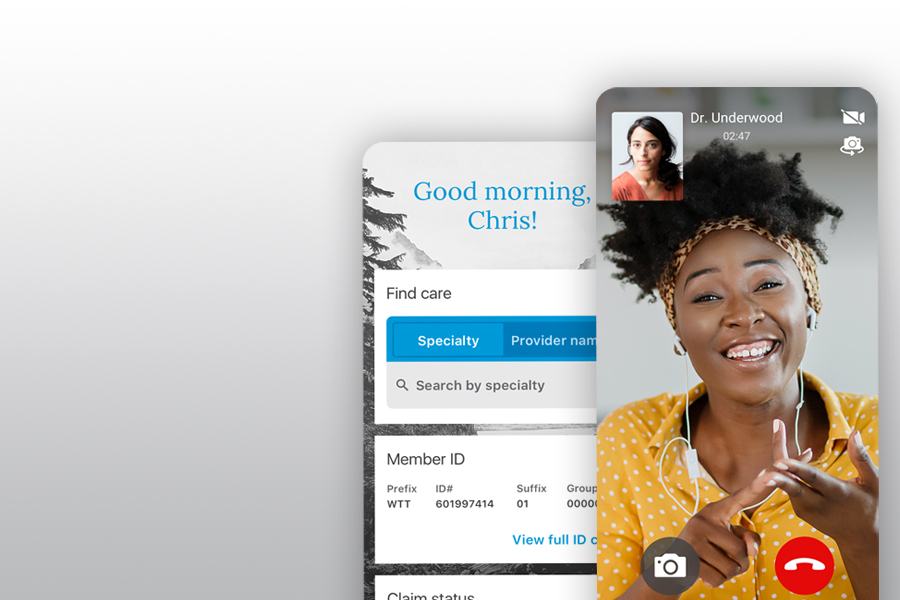
You're the expert on your body, symptoms, and needs
Finding a primary care provider (PCP) you trust will help you reach your personal health goals. Save money by choosing an in-network hospital and doctor. Use the Find Care tool when you sign in to your account or in the Premera mobile app.
Get virtual care from your PCP or from one of our virtual care providers, all in the comfort of your home.
Check with a provider if one or more of the following is true:
- You have changed your lifestyle or work/school schedule because of your menstrual period
- Your flow and/or duration of your period has changed significantly
- You don’t have a period each month
- Your flow is extra heavy (changing a pad every hour, needing both a pad and tampon, soaking sheets at night, bleeding onto clothing, or passing quarter-size clots or larger)
Menopause and how long it lasts
Menopause is when you haven’t had your period (without using hormonal birth control) for a continuous 12 months. Menopause can happen in your 40s or 50s, but the average age in the United States is 51. Symptoms including hot flashes, mood swings, sleep disturbances, difficulty concentrating, frequent urination, joint pain, and muscle aches may occur several years before or after menopause.
At Premera, we provide comprehensive and personalized healthcare services to all women. Our robust network of doctors, healthcare providers, and hospitals is designed with your needs in mind. No matter what phase of life you’re in, you can feel confident that you will receive the treatment, support, and care you need to live your healthiest life.
*https://www.bcbs.com/about-us/blue-cross-blue-shield-system