

Women's health
At Premera, we are dedicated to providing comprehensive and tailored healthcare services to all women.
Caring for all of you
While some health issues are common, women have distinctive healthcare needs. Some main differences are gynecological conditions; breast, ovarian and cervical cancers; pregnancy and menopause; and certain types of emotional and mental health challenges.
With thousands of doctors, healthcare providers, and hospitals in its network, Premera helps ensure you can access the treatment, support, and care you need to maintain your overall health.
Did you know?
The Center for Disease Control and Prevention (CDC) report states that heart disease is the leading cause of death for African American and white women. Heart disease and cancer cause about the same number of deaths for American Indian and Alaska Native women, and for Hispanic, Asian and Pacific Islander women cancer is the main cause of death followed by heart disease.
CDC facts
1 in 16
women aged 20 and older (6.2%) have coronary heart disease
1 in 16
white women (6.1%), Black women (6.5%), and Hispanic women (6%) have coronary heart disease
1 in 30
Asian women (3.2%) have coronary heart disease

Preventive checkups
Under most plans you have two preventive exams per year to use for general screenings like your annual physical checkup, pap smear test and mammograms. There is no out-of-pocket cost when you use in-network provider. It's 100% covered (free to you).
Preventive exams do not cover the evaluation of new symptoms or existing medical conditions. Your healthcare provider may ask you to return for an additional visit or may charge a medical visit in addition to your preventive visit.
Testing and screenings
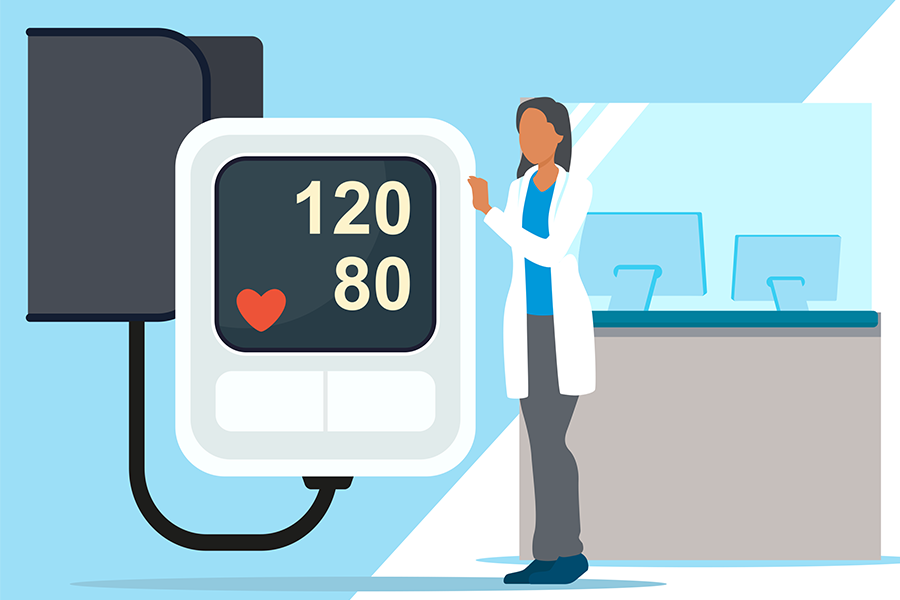
In addition to unique health experiences of pregnancy, menopause and gynecologic conditions, you also may have to manage common health conditions like high blood pressure, high cholesterol and high blood sugar.
Tests or services that are diagnostic or used to monitor and treat existing medical conditions are included under your health plan, but not free–you will be charged for deductibles, copays, or coinsurance. To avoid surprise costs, ask your doctor if a recommended test is preventive. If they say “no,” then it’s not free.
Find a doctor
Save money by staying in-network. Browse our extensive directory for doctors, dentists, pharmacies and medical centers in your plan’s network.
Debunking mammogram myths
Get checked out: When to get a preventive screening
If you have a family history or other risk factors, talk with your doctor as your screenings may start earlier.

Screening recommendations for women
Screening tests find health problems before you have symptoms and when treatment is easier.
(The following are general guidelines for common screening tests. Your healthcare provider will consider your family history and risk factors when making specific testing recommendations for you).
Preventive screenings are covered 100% when performed by in-network providers.
Cervical cancer screening
Healthcare providers recommend that women have a Pap test every 3 years from ages 21-29. From ages 30-65 HPV* testing may be done with or without a Pap test every 5 years OR women can continue Pap testing alone every 3 years.
*HPV stands for human papilloma virus. This is the virus that can cause cervical cancer and several other cancers. HPV vaccination can prevent over 90% of cancers caused by HPV and is also covered as a preventive benefit.
Osteoporosis screening
Osteoporosis is a health condition that weakens the bones and it’s more commonly encountered in women than it is in men. The risk of developing osteoporosis increases with age.
A bone measurement test to screen for osteoporosis is recommended for women 65 years and older.
Colon cancer screening
Regular screening is recommended beginning at age 45 and continuing until at least the age of 75. There are several colon cancer screening tests, including stool tests and colonoscopy. Talk to your healthcare provider to decide on the test that is best for you.
Breast cancer screening
Most healthcare providers recommend a screening mammogram every two years for all women ages 50-74. Based on your medical history or risk factors, you may need to start screening at an earlier age.*
*A yearly screening mammogram is fully covered starting at age 40.
Sexually transmitted infections
Depending on your age and risk factors, testing may be recommended for sexually transmitted infections. Talk to your healthcare provider for your personal recommendations.
Mental health
Everyone should be routinely screened for depression starting at age 12. In addition, women should be screened for depression during and after pregnancy as the first year after delivery is a time of special focus on mental health.
Note
Keep in mind that if your provider performs tests based on signs or symptoms, your visit could be billed as diagnostic rather than preventive care, which means you could be charged for additional services.

Pregnancy
Premera plans cover delivery at hospitals and birthing centers, home births, and post-delivery care as determined necessary. Women usually stay in the hospital 24-48 hours for vaginal birth and 48-72 hours for a Caesarean section birth. However, if there are any medical issues, a longer hospital stay might be needed. Learn more about pregnancy care.

Find an in-network primary care physician
Use the Find Care tool on premera.com/aag or the Premera mobile app. In-network providers will reduce your out-of-pocket costs.
Get virtual care from your doctor or from one of our virtual care providers.
Frequently asked questions
Coverage varies based on age and risk. Your health plan allows you and your providers to determine which tests are best for you and which you can skip. Tests based on signs or symptoms are billed as diagnostic rather than preventive.
For a full list of procedures and tests that qualify as preventive, review your preventive care benefits (PDF document).
If you are concerned about a family history of breast and female cancers, talk to your provider about your risk and the possibility of being tested for BRCA1 and BRCA2, genes that increase risk of breast and ovarian cancers.
We require preapproval for genetic testing to protect customers from unexpected bills. Your in-network healthcare provider can request approval for you. When done without a cancer diagnosis, the test is considered preventive and covered at 100 percent under most health plans. Breast cancer preventive medications are covered for women who have had breast cancer or whose BRCA test revealed higher risk.
Premera covers mammograms, subject to the terms of specific plans, based on your risks and what you and your healthcare provider decide is best for you.
One mammogram per year is considered preventive under most health plans. We also offer coverage for computer-aided diagnostic and 3-D mammography. If you're having a mammogram as a result of an abnormality, it may be billed as a diagnostic test and be subject to coinsurance or deductible.
Sometimes a provider will recommend an ultrasound or magnetic resonance imaging (MRI) in addition to a mammogram. That is typically billed as a diagnostic test and is subject to coinsurance or deductible.
If you’re referred for additional breast or cervical cancer screening, a Premera nurse might call to offer support and answer any questions you might have.
If you are having trouble conceiving, some tests can be done to evaluate the issue. Available for men and women, these tests are billed as medical tests and are subject to copay and deductible. Hormone tests and labs are covered if they're not coded for infertility.
Fertility enhancement medications and treatments, such as in-vitro fertilization (IVF) are covered on your plan. Check your benefit booklet or ask your plan administrator.
If contraceptives are prescribed for birth-control reasons, many generic options will be covered with no out-of-pocket cost to you. If you are a member, go to Prescriptions to see if your preferred brand is covered on your plan.
Sometimes providers prescribe birth control for other issues, such as balancing hormones or acne, which would not be covered at 100 percent by your plan. Talk to your doctor about finding the right option for you.
FDA-approved methods of birth control are covered with a written prescription under most plans, including:
- Barrier methods, like diaphragms, condoms, spermicide and sponges
- Hormonal methods, like birth control pills, patches, and vaginal rings
- Implanted devices and intrauterine devices (IUDs)
- Emergency contraception
- Sterilization procedures, such as tubal ligation (tying the fallopian tubes) or implants
- Patient education and counseling with your doctor
Your health plan covers abortion procedures. Check your benefit booklet to review the details of your coverage, or contact us for more information.
Menopause is the time in your life when your period stops for at least 12 months.
Some women go through menopause without symptoms, but most have one or more of the following symptoms: hot flashes, night sweats, sleep problems, vaginal dryness, depression, trouble concentrating or remembering things. Eating a healthy diet, exercising regularly, and having a regular sleep schedule can help.
If your menopause symptoms bother you, talk to your healthcare provider. You should also see a healthcare provider if you experience any bleeding during menopause.
Premera covers office visits and FDA approved medications for menopause treatment. Tests or services that are diagnostic or used to monitor and treat existing medical conditions are included under your health plan, but are not free. You will be charged for deductibles, copays, or coinsurance.
Certain HIV preexposure prophylaxis (PrEP) medication is covered at no cost when used as a preventive measure for those identified as high risk for HIV infection. Emtricitabine-tenofovir disoproxil is considered preventive when used for HIV PrEP. Descovy and Truvada are considered preventive when used for HIV PrEP and you have tried emtricitabine-tenofovir disoproxil in the last two years.
Your health plan covers preventive care services as required by state and federal law. For more information, please review the "A" and "B" rated services on the United States Preventive Services Task Force, vaccinations recommended by the Centers for Disease Control and Prevention and preventive care and screening recommended by the Health Resources and Services Administration. See the list on healthcare.gov.